
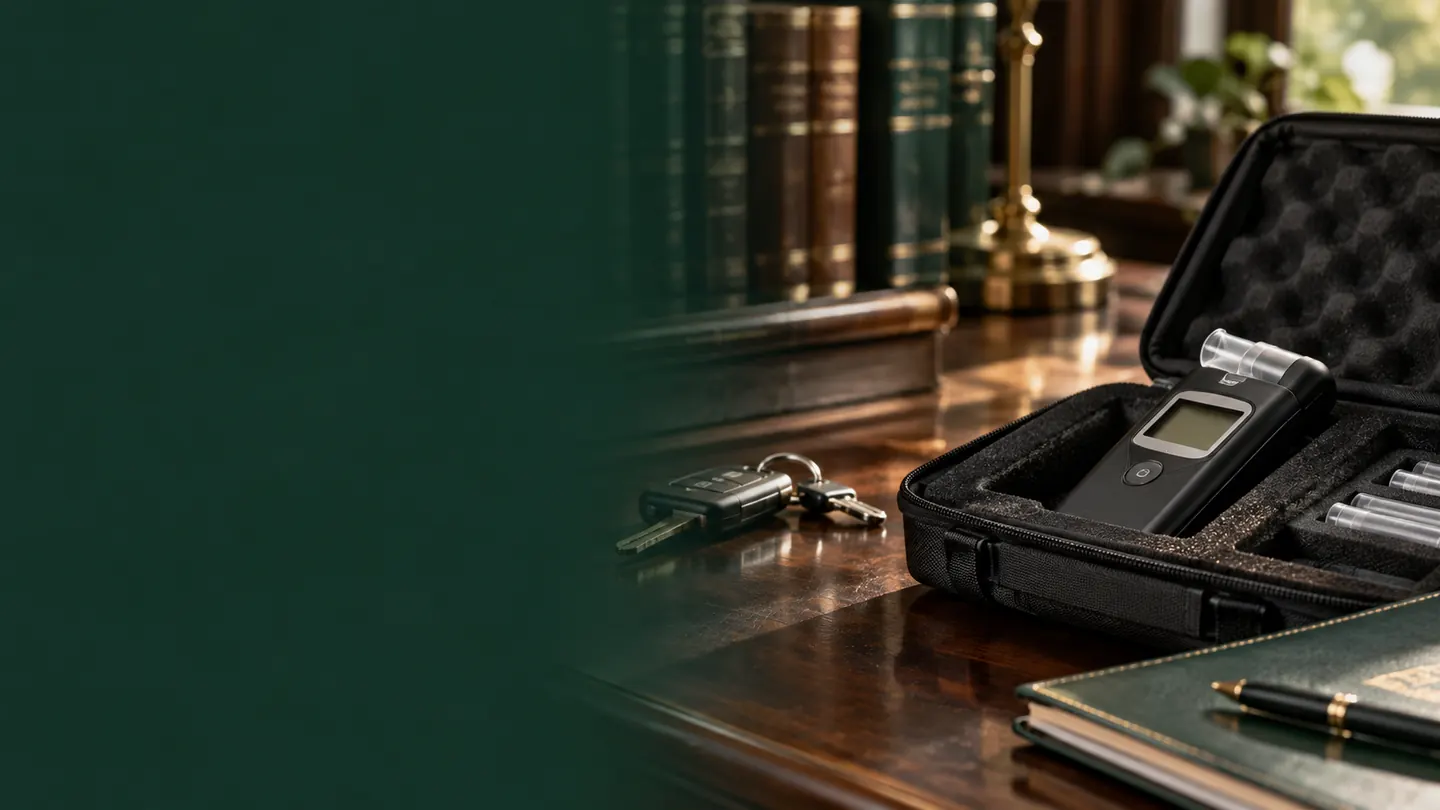
The re-introduction on 1 August 2016 of the Dräger Alcotest breath alcohol equipment as admissible evidence in Western Cape’s courts has increased perpetrator’s, who have been caught drinking and driving, chance of conviction. The applicable law which the perpetrator would be charged for is contravening section 65(5)(a)/(b) read with sections 1, 32, 65(6), 65(8), 65(9), 69(1) and 89 of National Road Traffic Act (The RTA), 93 of 1996 and Regulations 115, 332 and 332A of the National Road Traffic Regulations 2000.
Section 65 states as follows:
(5) “No person shall on a public road-
(a) drive a vehicle; or
(b) occupy the driver's seat of a motor vehicle the engine of which is running, while the concentration of alcohol in any specimen of breath exhaled by such person is not less than 0,24 milligrams per 1 000 milliliters…”
In order to be found guilty of the above, the State will be challenged in proving, beyond reasonable doubt, not only that the accused contravened Section 65(5) but furthermore, that there is compliance with all the relevant regulations, preconditions and further requirements relating to the Drager Alcotest. In State v Hendricks (2011) 4 All SA 402 (WCC) the court discusses the latest protocols which must be met in order for the State to have a successful prosecution against the accused person.
It is incumbent upon the State to prove that the result produced was obtained by using the "prescribed equipment" as stated in section 65(7) which is prescribed by Regulation 332. In summary, Regulation 332 requires that the specific make and model of equipment must be tested in terms of South African National Accreditation System by an accredited test laboratory and a test report indicating compliance with standard specifications is issued in respect of such make and model of equipment.
There are further 'Prosecuting Guidelines for Evidentiary Breath Testing Machines’ which set out important requirements which are essential before ascertaining concentration of alcohol in breath of the accused. The equipment must be operated by a registered traffic officer who has passed an operator’s course for the specific model and an operator’s certificate of competence must be issued and kept in the operator’s possession. The specific equipment used must be calibrated at least once every six months by an accredited laboratory and a calibration certificate must be issued. Furthermore, if maintenance is done to the equipment, it must be recalibrated. All of the above calibrations and maintenance must be recorded in an appropriate service record.
In terms of State v Hendricks supra “there needs to be one 'successful' breath sample taken on which the machine will perform two tests. The first test directly tests the breath sample and the second concurrently tests the accuracy of the first test as well as checking for the presence of any 'interfering substances'”.
Moreover to the abovementioned requirements and protocols there are also certain preconditions which must be met before the accused person can be tested. The essential four being a 15 minute waiting period between the last intake of any alcohol-containing substance to avoid a impermissible biased measurements, and should the accused “vomit or belch” that the same waiting period be observed. The accused should breathe evenly and normally and not hyperventilate and lastly no evidential measurements must be performed in environments which contain alcoholic vapours or excessive tobacco smoke.
Taking the above into account it is clear that the State could have a difficult time in proving its case against the accused. Furthermore, “It is a well-established principle of law that justice must not only be done, by must be seen to be done” Bonugli and Others v NPA and Others 2010 (2) SACR 134 (7). It is advisable to obtain legal advice to assist you if you are ever charged with drunken driving.
Article by Myrna Heunis, candidate attorney at Malan Lourens Viljoen Inc.